

February 1, 2026 to March 28, 2026
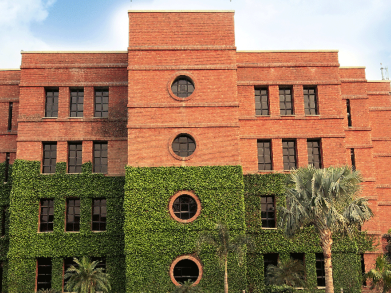
The Barracks Art Museum, Lahore
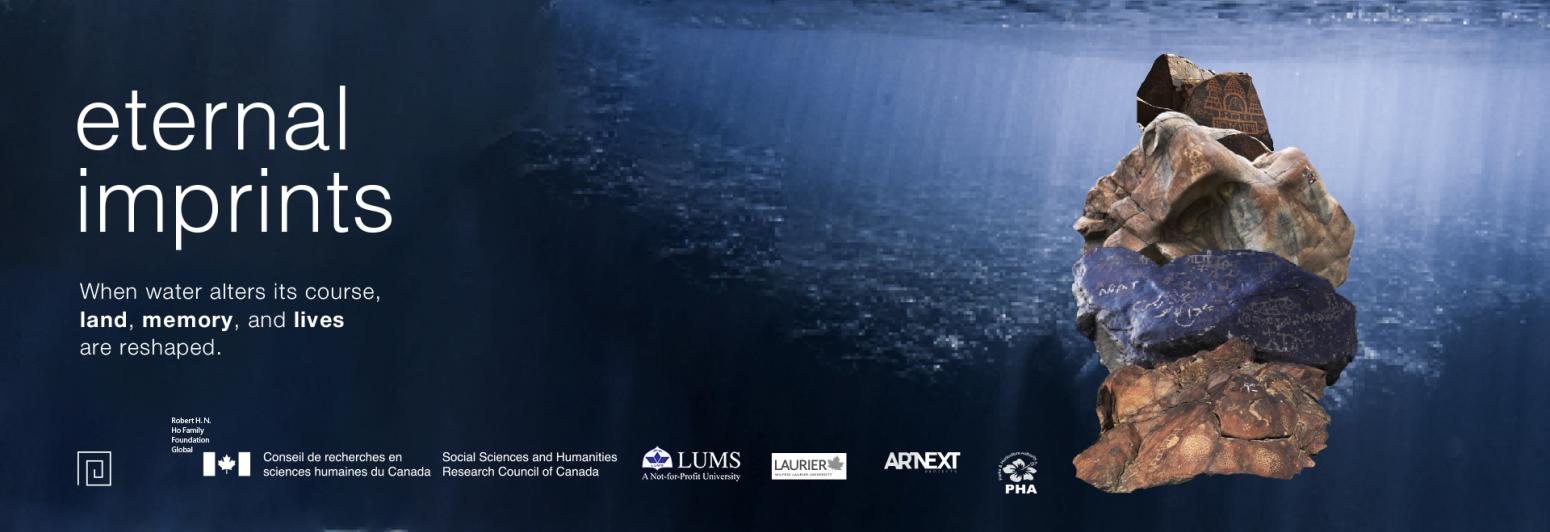
Eternal Imprints, is a curated, research-driven exhibition that reimagines ancient rock art as a living climate archive, bringing together ecological data, digital preservation, and multiple knowledge systems across art, research, and emerging media.
Along the Upper Indus River, more than 6,000 carved rocks bearing over 37,000 petroglyphs and inscriptions, created over millennia, are now at risk of submersion due to climate change and human intervention. As landscapes transform, so do histories of movement, displacement, and memory. What once stood in open air for centuries is slowly disappearing beneath the surface.
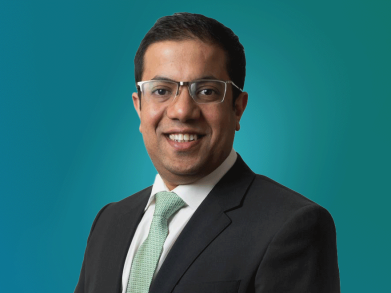
The exhibition emerges from over a decade of research led by Dr. Murtaza Taj, Associate Professor at LUMS, who has co-curated the exhibition alongside fellow researchers and artists. The work reflects the important role LUMS faculty continue to play in preserving Pakistan’s cultural heritage through interdisciplinary research, digital innovation, and global collaboration.
Eternal Imprints highlights the intersection of climate, heritage, and human migration, revealing how cultural memory is shaped, and reshaped, across generations.
Lead Researchers
Dr. Murtaza Taj, LUMS
Dr. Jason Neelis, Wilfrid Laurier University, Canada
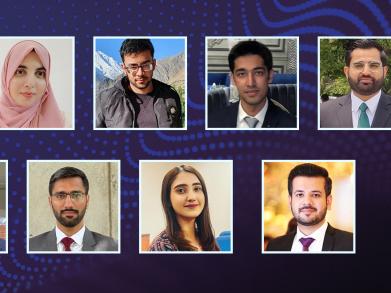
Team
Atiq Hashmi
Muzammal Ahmad
Hybrid Artist / Curator
Faisal Anwar
Research & Exhibition Partners
LUMS, Wilfrid Laurier University, UNESCO, USAID, SSHRC (Canada), Waksaw–Uddiyana Archaeological Alliance, Robert H. N. Ho Family Foundation, kickstart (Pakistan)
Visit the exhibition and engage with a powerful story of climate, culture, and continuity.
This event is open to all. Hope to see you there!