

SBASSE Student Named Rhodes Scholar-Elect 2026 for Pakistan
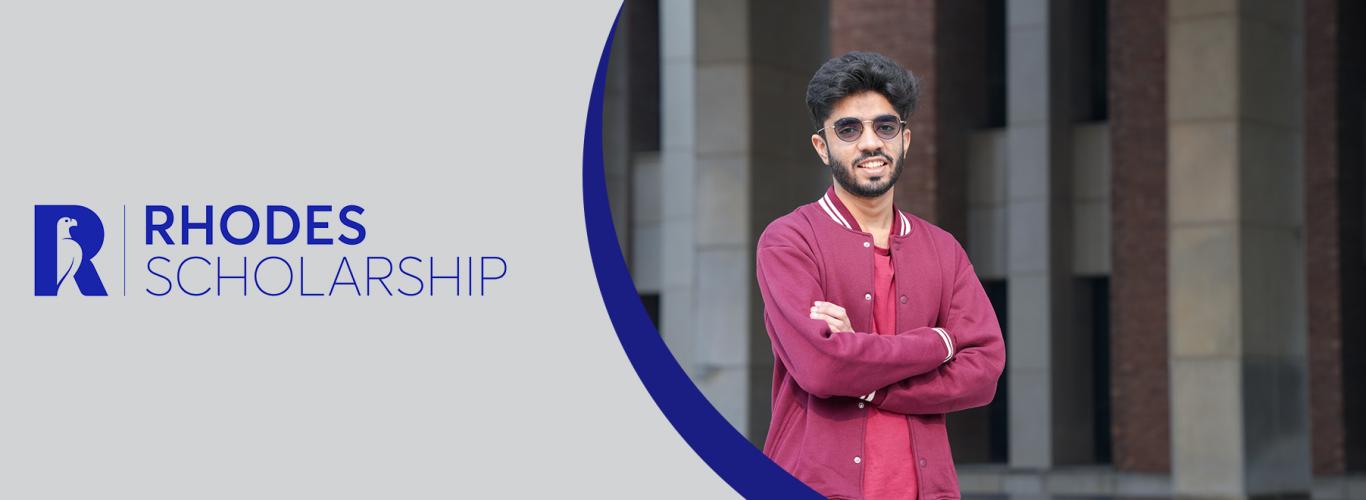


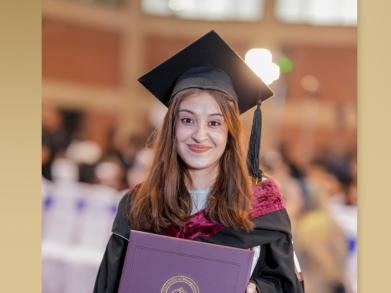
Syed Asad Asif, a student at the Syed Babar Ali School of Science and Engineering (SBASSE), has been selected as one of the two Rhodes Scholars for 2026 from Pakistan!
Asad is an exceptional student from the Class of 2026 at SBASSE, majoring in Physics with a minor in Mathematics. While at LUMS, he has taken several advanced courses in quantum mechanics and pure mathematics. Beyond academics, Asad has been deeply involved in science communication initiatives through the LUMS Student Mathematics Society (LSMS), LUMS Math Circles, and SPADES. As the Director of Salam Sessions (a department within LSMS), he launched an outreach programme in collaboration with STEAM Pakistan to promote girls’ access to mathematics education.
At Oxford, and as part of the Rhodes community, Asad aims to pursue two goals: first, to explore how a national quantum industry can be established in Pakistan, and second, to develop a nationwide science society that democratises scientific knowledge, promotes science journalism, and fosters scientific thinking. He plans to pursue a DPhil in Theoretical Physics, focusing on the topological properties of quantum matter and their potential technological applications.
Asad opened up about his journey, sharing experiences and words of encouragement for other students pursuing their passions.
Congratulations on being named the Rhodes Scholar-Elect 2026 for Pakistan! How did it feel when you first heard the news, and what did that moment mean to you?
When the Rhodes panelists stepped out of their room and stood before all the finalists, I held my breath. I was excited, hopeful — and deep down, I wished to hear my name among the recipients. When I was a child, someone once told me about a scholarship called the Rhodes Scholarship at Oxford University. At that time, only one student from Pakistan would receive it each year. I could never have imagined that one day I would become a Rhodes Scholar from Pakistan myself. In that moment, hearing my name, it felt surreal — I was over the moon.
You’re majoring in Physics and minoring in Mathematics at LUMS. Could you share what inspired you to take on both, and how your experiences at SBASSE shaped your academic journey?
I became interested in both subjects during my A Levels. For some reason, I have always enjoyed mathematics—proving theorems and playing with equations. Physics, to me, is simply viewing the universe through the lens of mathematics. My mind naturally understands the logical structure of mathematics, and I love applying that framework to physics.
Your senior-year research focuses on black holes and Hawking radiation. What drew you to this area, and what excites you most about exploring the universe at both the atomic and cosmic levels?
I did not put too much thought into choosing this area initially. I simply had to select a supervisor for my senior year project, and the one I chose happened to be working in this field — so I began working with him. It turned out to be an incredibly valuable experience. Physics has always been fascinating to me, but since the start of this project, my fascination has deepened in a way I hadn’t imagined. I often say that physically I live in Lahore, but my mind lives in the outer universe, near black holes. Physics gives the mind the ability to travel to places the body can never reach.
You’ve been deeply involved in the LUMS Math Circles and Salam Sessions, running sessions for school students, and promoting girls’ access to mathematics. How did these experiences shape your passion for science communication and community outreach?
Science communication is something I find truly exciting. People often see science and mathematics as boring or difficult, and in traditional lectures, the concepts can indeed feel dry and tough. But science communication is different — it is about presenting science to ordinary people in an interactive, engaging, and meaningful way. When I do this, I genuinely enjoy the process and the content I am teaching. For example, teaching the concept of time through interactive activities, stories, and videos is not only enjoyable for the students but deeply fulfilling for me as well.
At Oxford, you plan to pursue a DPhil in Theoretical Physics. Are there specific questions or areas in quantum theory or cosmology that you’re especially looking forward to studying?
I have not yet fully decided on the exact area I will specialise in at Oxford. Broadly, I want to work at the intersection of mathematics and physics. There are many questions I am passionate about exploring — in general relativity, quantum physics, and modern theories of gravity. I am eager to discover which direction aligns best with my strengths and interests, and ultimately, which supervisor I will have the opportunity to work with.
Looking ahead, you hope to contribute to Pakistan’s scientific community and education outreach. Could you share your long-term vision and how you hope to make an impact?
Yes, I want to become a scientific leader in Pakistan and promote the growth of science-based industries. For example, I would like to work on establishing a quantum technology industry in the country. Additionally, I aim to create a national-level science society to foster scientific knowledge and promote a culture of science. My two main inspirations are Khan Academy by Sal Khan and Dekho Suno Jano by Faisal Warraich.
What message would you like to share with students who dream of making a difference through science and education?
I can only give advice once I have truly made a difference in society through science and education. At the moment, I have just started my journey, and I don’t feel I am yet in a position to give guidance to others.
At the end of his interview, Asad shared some words of encouragement: "Always follow your interests and passions. There will always be critics, but your responsibility is to work hard consistently, have faith in Allah, and never give up. I doubted my decision to pursue physics at times, but today I realize it was the best choice I could have made."
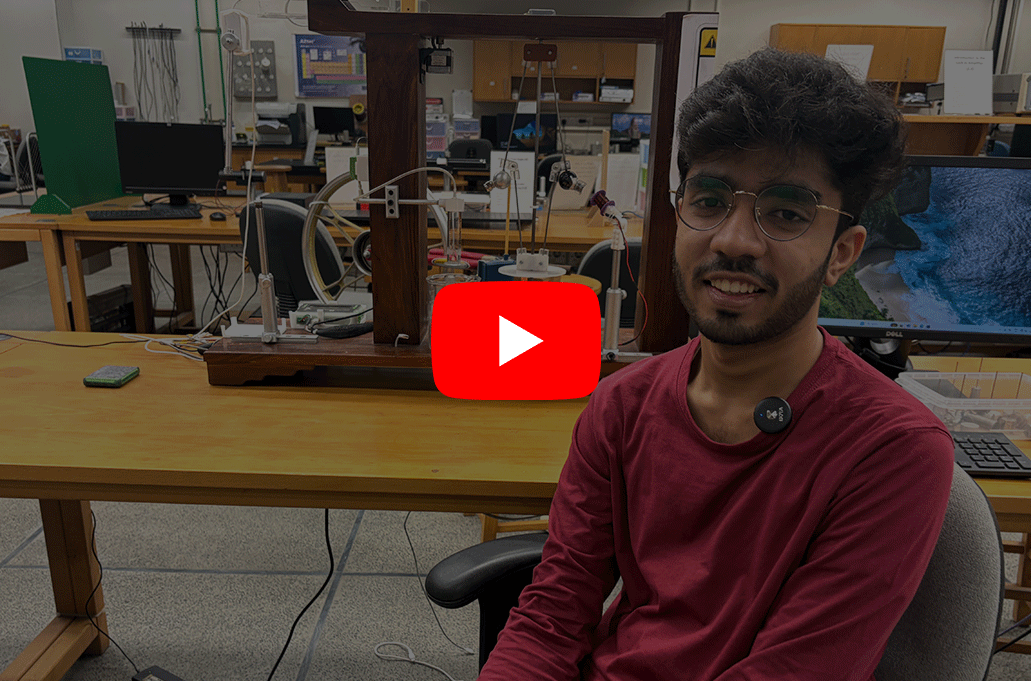
Watch Syed Asad Asif's interview here.